Bank of England Raises Interest Rates to 4% in First Hike in Three Years
The Bank of England has raised interest rates to 4%, its first increase in more than three years, as policymakers move to contain inflation driven higher by rising energy prices linked to the conflict in the Middle East.
The Bank’s Monetary Policy Committee (MPC) voted 8-1 on Thursday to lift Bank Rate by a quarter of a percentage point from 3.75%. One member, Catherine Mann, voted for a larger half-point increase to 4.25%, arguing that the Bank needed to act more forcefully to stop high inflation becoming embedded in wage and price-setting.
The decision, announced on Thursday 5 November, is the first rise since August 2023 and the first change in rates of any kind since a cut last December, when Bank Rate was lowered to 3.75%.
Why the Bank acted now
The case for a rise rests above all on inflation. Annual consumer price inflation reached 3.5% in September, an 11-month high and well above the Bank’s 2% target. The Bank now expects inflation to climb to around 5% by the middle of next year, more than double its target, before falling back as the effect of higher energy prices fades from the annual comparison.
The main driver is energy. The conflict in the Middle East is now in its ninth month, and global energy prices have continued to rise from an already elevated level. The Bank said there was still only limited evidence so far of higher energy prices feeding through into other prices and wages, but added: “the degree of inflationary pressure in the pipeline is now sufficient to warrant an increase in Bank Rate”.
Household energy bills are set to add to the pressure. The regulator Ofgem’s price cap for a typical household rose by 3.6% on 1 October, and a further sharp rise is expected in January. The Bank also revised up its growth forecasts, to 1.6% this year and 1.3% next year, stronger than the figures predicted last week by the government’s Office for Budget Responsibility.
What it means for households and borrowers
Borrowers on tracker mortgages, whose rates move in line with Bank Rate, will see their monthly payments rise. The BBC estimates the increase could add around £45 a month to a typical tracker mortgage, while households coming off fixed-rate deals face higher rates than those they took out years ago. Savers could see slightly better returns on variable-rate accounts, although banks do not always pass on the full increase.
The timing is awkward for households already facing higher energy bills. Chancellor John Healey’s first Autumn Budget, delivered last week, included a one-off £100 payment towards energy bills for 20 million households, but higher borrowing costs will feed through to mortgages, loans and credit cards over time.
Higher rates are also a political headache for Prime Minister Andy Burnham, who has sought to ease cost-of-living pressures. The Bank’s warning that inflation could reach 5% next year underlines how far price rises remain from its target.
What happens next
The Bank stressed that policy is “not on a pre-set path” and that future decisions will depend on incoming evidence, in particular on how likely high energy prices are to feed through into other prices and the wider economy.
Its next scheduled decision is due on 17 December. Financial markets are pricing in a chance of another rise before long, and analysts at Scotiabank expect the Bank to hold in December and raise rates again in February, taking Bank Rate to 4.25%. The Bank’s own forecasts see inflation peaking at close to 5% in the second quarter of next year before gradually easing back towards the 2% target.
For now, the message from Threadneedle Street is clear: with energy-driven inflation still building, the era of falling interest rates is over, and borrowers should prepare for borrowing costs to stay higher for longer.
More from The Digi News
- Bank of England Poised to Raise Interest Rates to 4% in First Hike Since 2023
- Healey to Unveil Cautious First Budget as Borrowing Costs Climb
- Browse more Business
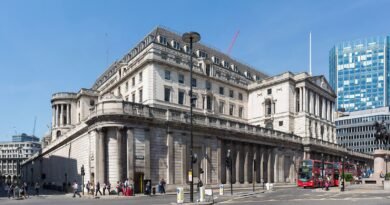
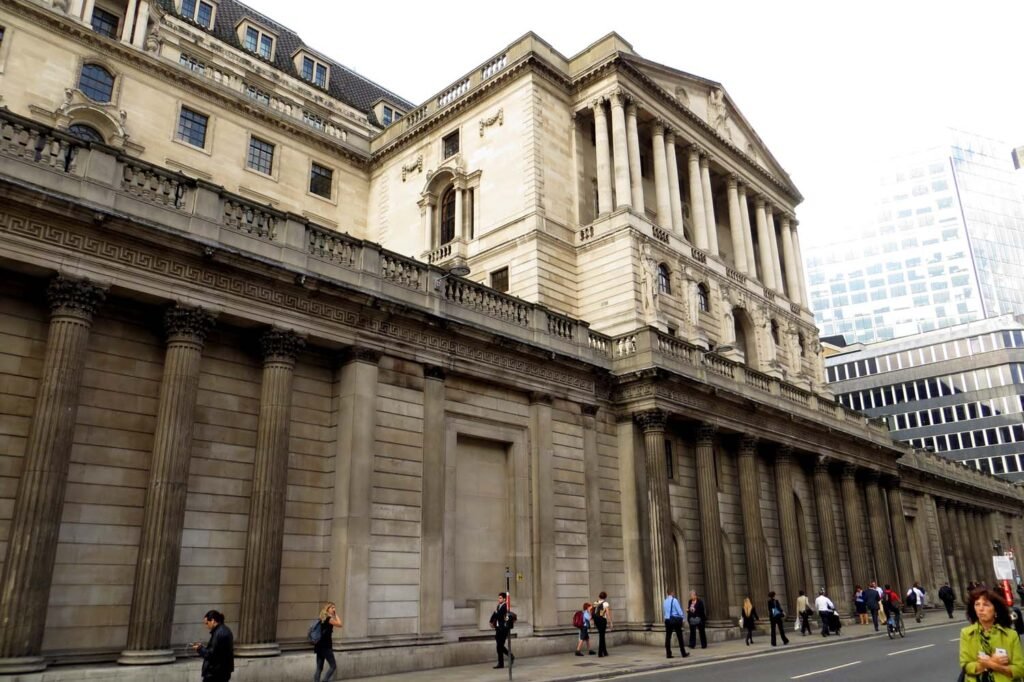
Featured image: The Bank of England building on Threadneedle Street, London. Photo: Steve Daniels, CC BY-SA 2.0, via Wikimedia Commons.