King Charles Leads Nation in Silence at Cenotaph as Record Nine Former PMs Join Remembrance Sunday
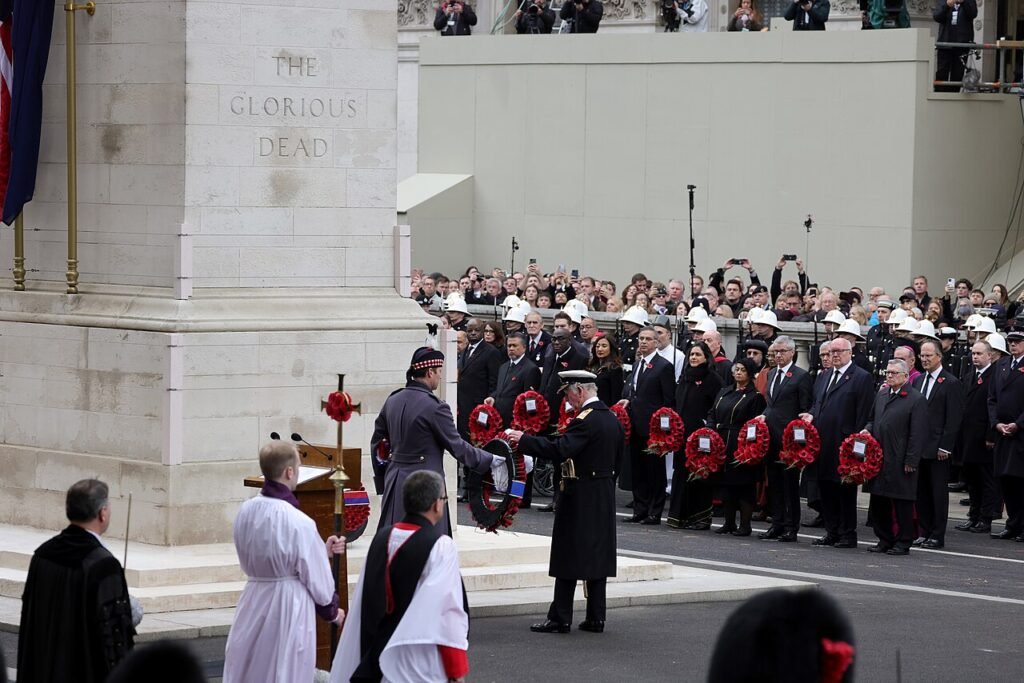
King Charles III led the nation in a solemn two-minute silence on Remembrance Sunday, laying the first wreath at the Cenotaph in Whitehall as Britain honoured the men and women who have died in conflict.
The service on Sunday 8 November brought together a record nine former prime ministers, while Andy Burnham attended for the first time as prime minister. Around 10,000 armed forces veterans later took part in the march-past along Whitehall, as ceremonies were held at war memorials across the country.
A record gathering of former prime ministers
Standing close to the Cenotaph were nine former prime ministers: Sir John Major, Sir Tony Blair, Gordon Brown, Lord Cameron, Baroness May, Boris Johnson, Liz Truss, Rishi Sunak and Sir Keir Starmer. It was the largest number of former premiers ever gathered together at the ceremony.
Mr Burnham laid a wreath alongside senior politicians including Kemi Badenoch, Sir Ed Davey, Nigel Farage, Shabana Mahmood and Commons Speaker Sir Lindsay Hoyle. Mr Farage laid a wreath for the first time as leader of Reform UK.
The King, wearing a field marshal uniform with a greatcoat, cap and sword, saluted as he stepped back from the memorial after laying his wreath, which was inscribed with the words “In everlasting remembrance”. He was followed by the Prince of Wales, who also laid a wreath.
Ten thousand veterans march past
The National Service of Remembrance began at 11 a.m., with the King leading the Royal Family and political leaders in the two-minute silence. On a grey autumn morning, the Cenotaph, the imposing white Portland stone memorial in Whitehall, was the focus of a service that has been held at the memorial for more than a century.
Thousands of veterans attended the ceremony in central London, and around 10,000 armed forces veterans took part in the march-past that followed the service. Similar ceremonies were held at war memorials in towns and cities across Britain, as communities gathered to remember those who have died in conflict.
Remembrance Sunday is observed on the second Sunday of November. It is distinct from Armistice Day itself, which falls on 11 November, the anniversary of the armistice that took effect at 11 a.m. on 11 November 1918 and ended the fighting on the Western Front in the First World War.
Why Britain remembers
The red poppy worn by the King, the Royal Family and political leaders is the symbol of remembrance, and wreaths of poppies are laid at the Cenotaph each year in recognition of the fallen from conflicts dating back to the First World War.
Commemorations began on Saturday evening with the traditional Festival of Remembrance concert at the Royal Albert Hall in London, which was also attended by members of the Royal Family.
A quieter tribute for Prince Harry
Prince Harry marked the day away from the main ceremony in London, attending a low-key Remembrance Sunday event in a small English town. His father led the official ceremony at the Cenotaph, laying a wreath of poppies — the symbol of remembrance — at the base of the memorial.
The King has led the national service each year since his accession, and this year’s ceremony came as Britain continues to reflect on the sacrifices of its armed forces in conflicts dating back to the First World War.
The service closed with the march-past, as the veterans filed past the Cenotaph to pay their own tributes to fallen comrades, bringing to an end a morning of remembrance in the capital.
More from The Digi News
- King Charles to Confront Britain’s Slave Trade Legacy in Landmark Antigua Speech
- Burnham ‘Open’ to Formal Apology for Britain’s Slave Trade — But Rules Out Reparations
- More World News from The Digi News
Featured image: Members of the Royal Family at the Cenotaph in London during a Remembrance Sunday service. Photo: Number 10, via Wikimedia Commons (CC BY 2.0).